I knew from the time I was twelve years old, working in my mother's law office, that I didn't want to be an attorney. What I didn't know yet was what I was looking for instead.
I started as a field biologist. Out in the field, I kept running into the same collision: the critical habitat that plants and animals needed to survive was the same coastline everyone wanted to use for everything else. The science was clear. The conflict was real. And the decisions being made weren't informed by either one.
I went to law school not to argue cases but to find a better way to make decisions — ones that were examined, tested, and durable. In my last year, I took a class in negotiation, because there was no class in mediation. I walked out knowing that this was what I had been looking for the whole time. An informational interview with a mediator named Lewis Michaelson showed me exactly who I wanted to be when I grew up. Two years of environmental dispute resolution followed. Then the Great Recession closed that door.
And my daughter opened another.
When my daughter started preschool, I was transfixed. What drew me in, I eventually came to understand, were the same things I love about mediation. Non-verbal children were a human behavior puzzle to be solved — what did this tiny human need to reach the next developmental milestone? The more I worked on that puzzle, the more I realized the work extended beyond my classroom to the children's families as well. I became more interested in the family work than the classroom work. But I didn't put it all together until the last section of my fellowship through the Program for Infant-Toddler Care — the unit on conflict within families and across cultures. That was the moment that led me back to mediation.
That fellowship also gave shape to a rule I had already been living by without naming it: seek to understand the parents, don't judge them. I made it firm — for myself and for the teachers working under me — because it is not always easy to hold. A parent who's short with you at pickup, a parent who misses every deadline, a parent whose choices you'd make differently yourself: the job was never to grade them. It was to understand what was actually happening for them. That rule is the one I still come back to, every time, when a parent, a child, or a colleague is testing my patience.
I had always thought I'd return to mediation when my daughter was in middle school, and the PITC fellowship created my pathway back sooner than I expected. I returned to my foundational training and worked back up through advanced coursework, volunteering along the way to learn and practice how to combine my mediation skills with what I now knew about child development and family systems.
That combination eventually led to my workbook, Your Co-Parenting Plan Blueprint. As I discovered that the tools I had been using to individually attune care for the youngest children in my classroom could be applied to help parents understand their own children — and each other — I wanted to put those tools in families' hands directly.
Courts don't solve fundamental disagreements. They take a long time and a significant amount of money, and when it's over, they hand down a decision that neither party built. Without genuine understanding — of what the other person actually needs, of why this particular issue matters so much — compliance falls apart. You can win a court case and still lose the peace.
What I love about mediation is that we get to investigate the why behind the dispute before we build the what, when, and how. Why rip your life apart for a temporary solution when there is a process designed to help you walk through the conflict and come out the other side with something durable?
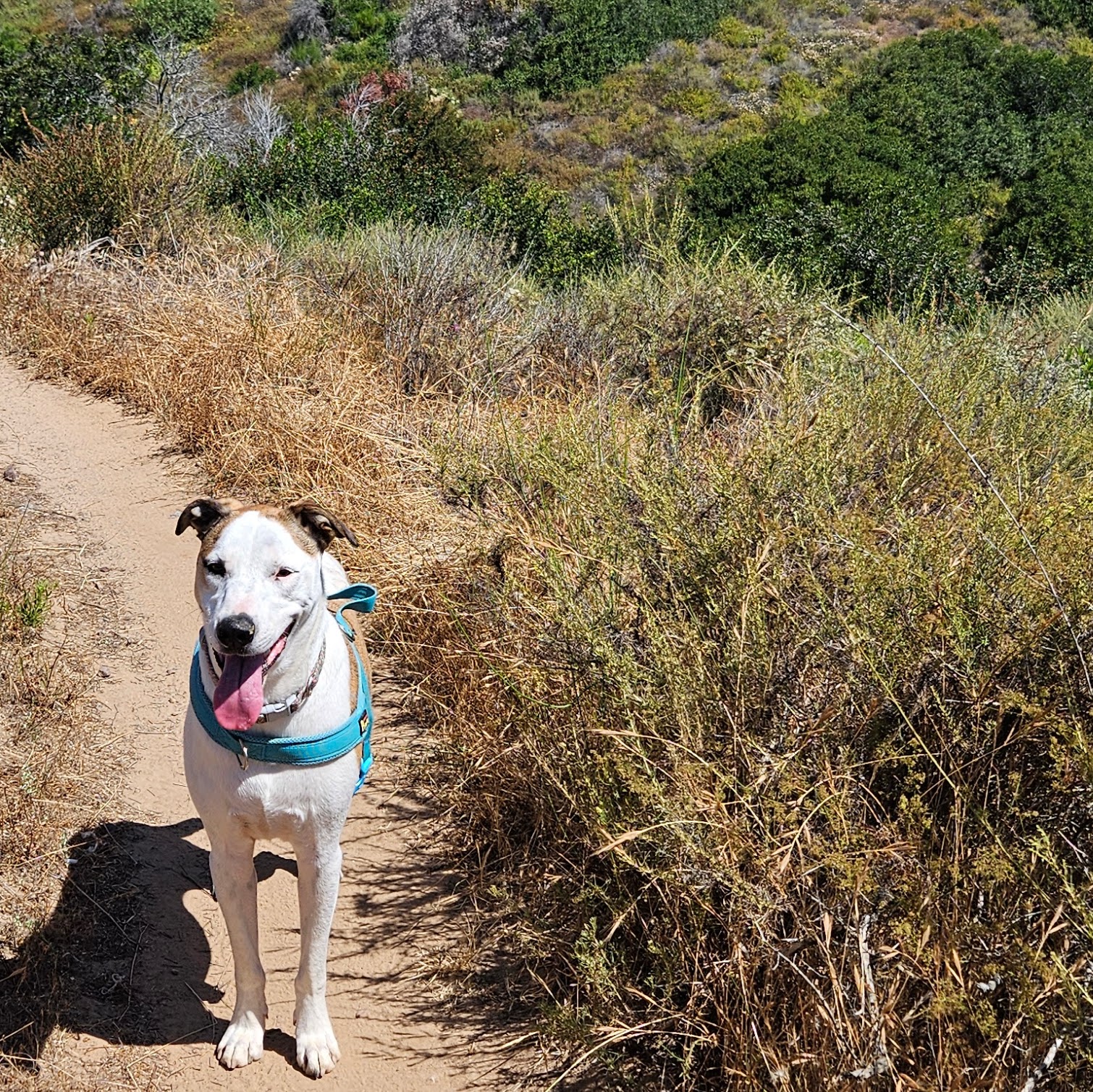
People often ask how I de-stress after mediation sessions. The answer is Puddles.
He knows when I'm saying goodbye on a Zoom call — something in the rhythm of the sign-off — and he is right there waiting for a walk the moment I close the laptop. Along those walks I debrief with myself, plan the next session, and let go of what I'm carrying from the last one.
But Puddles is not a passive assistant. He came to me as an anxious, reactive sixty-pound stress ball, and in many ways he still is. He is also my greatest trainer in staying calm in the moment, keeping on my toes, and reading our surroundings carefully enough to get ahead of triggers before they become crises. What I don't joke about is what he has taught me: that fear, anxiety, and overwhelm require patient, consistent, never-drop-the-ball attention. Not just on the hard days. Every day. That's why I'm willing to step into conflict with you. Not because it's easy. Because I've been training for exactly this, in every room I've ever been in.
People sometimes ask what mediation is really like, day to day. The honest answer: it's a front-row seat to the truest version of people's lives — the parts they don't show anywhere else. I don't take that lightly. Being let in like that is not something I've ever gotten used to, and I hope I never do.
MC3 Certified Mediator · Parenting Coordinator · Certified Co-Parenting Specialist · PITC Fellow
J.D., University of San Diego School of Law · B.S. Zoology, UC Santa Barbara
San Diego Civil Mediation Panel · Southern California Family Mediation · National Conflict Resolution Center · American Bar Association · Co-Founder, Elder Care Coalition · Collaborative Divorce Training, 2026
MC3 certification reflects training and standards achieved during the program's active years in California. Certification in the state is transitioning to ABA oversight.